
The human side of ecosystem building

Ecosystems are
built by people.

Shared hopes for entrepreneurs meet different incentives, histories, pressures, and possibilities.

The Irrational Ecosystem brings human behavior into focus—helping entrepreneurial ecosystem builders question assumptions and create better conditions for trust and shared action.

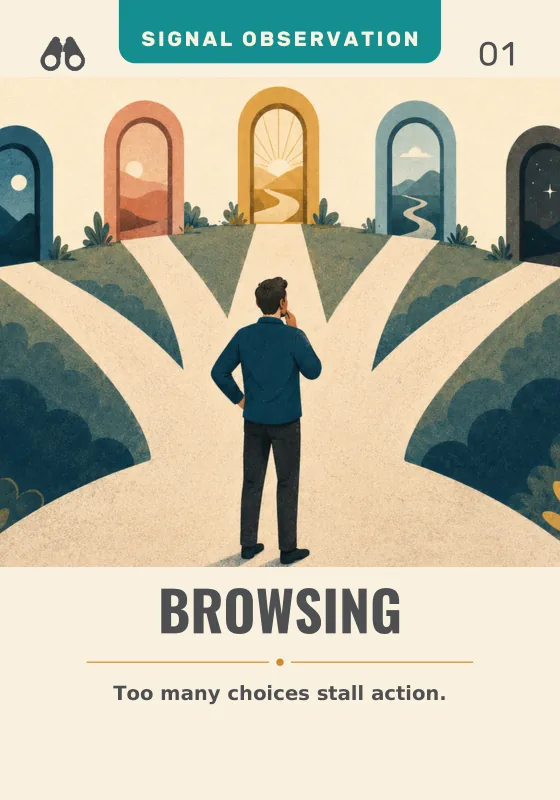
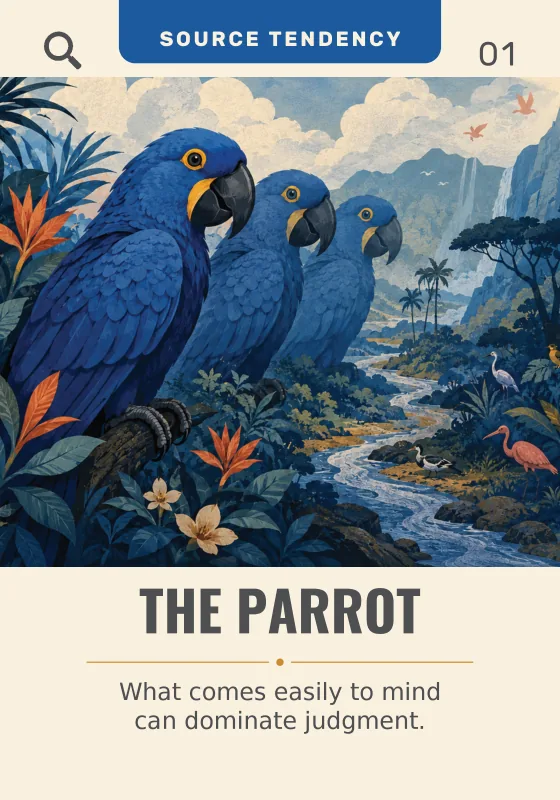
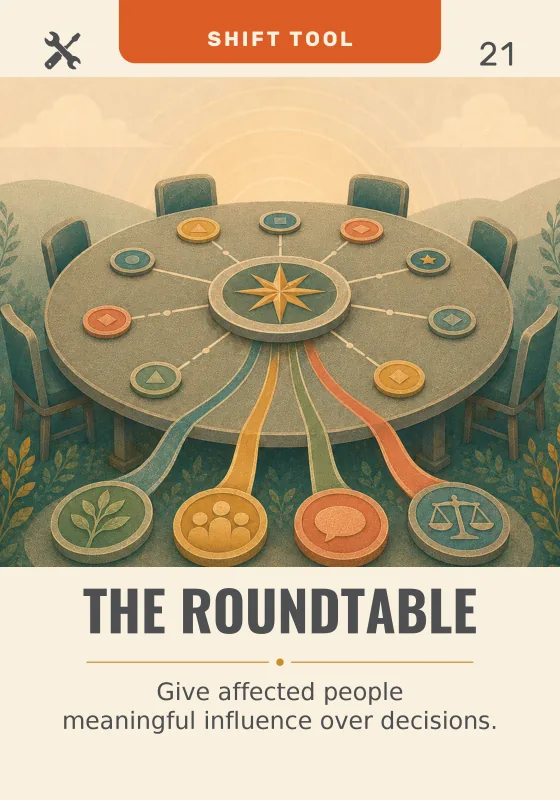
Browsing illustrated Signal card The Parrot illustrated Source card The Roundtable illustrated Shift card
A visual language for the work between people.
Illustrative close-up of a diverse group sharing notes and discussing a challenge around a table
Different perspectives, brought into the same conversation.

Irrational Ecosystem Theory

Everyone agrees.
Why is progress still hard?

People can want the same progress and still hesitate, protect a familiar approach, or avoid a risk. What makes sense from one position can create difficulty elsewhere. All too often, entrepreneurs pay the price.

The Irrational Ecosystem sits at the intersection of systems thinking and behavioral economics. Explore how human choices and the wider system influence one another—and work with the people affected to create better conditions for trust and shared action.

Choice within a human systemIndividual · Organizational · Ecosystem · Societal
See the Method in Action

Ground the work

Structure

Roles, Types, Forces, Phases, and Choices help you understand the people, the setting, the conditions shaping opportunity, the shared work, and what shapes a decision.

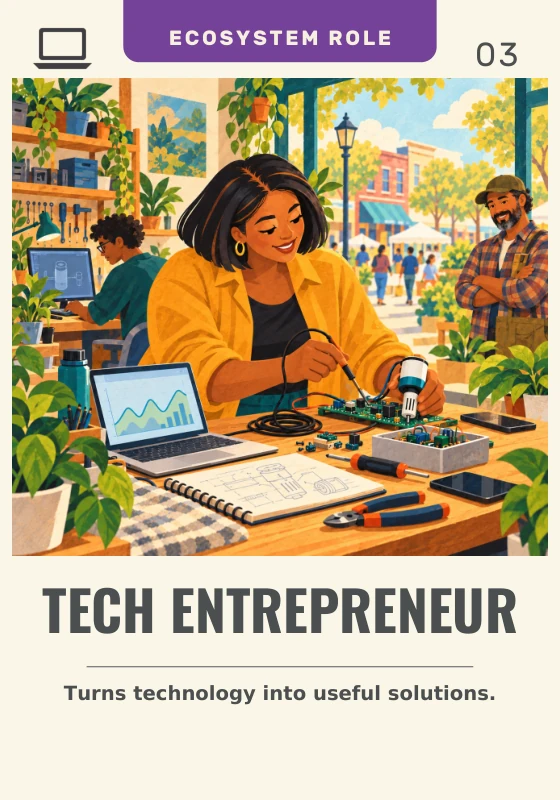
Ecosystem Roles

Same ecosystem.
Different vantage points.

Entrepreneurs, providers, funders, mentors, and other participants bring different priorities, pressures, and influence.

Explore another person’s position, then examine your own. One person can hold several roles.

See Roles in Context
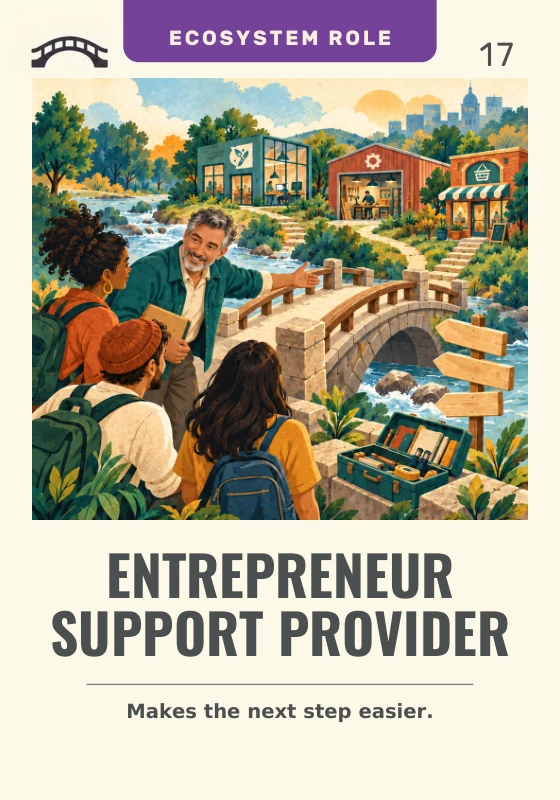
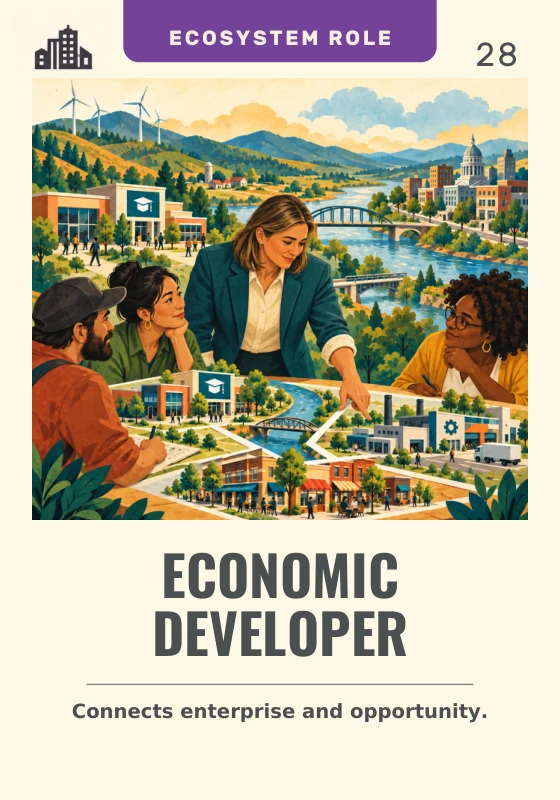
Tech Entrepreneur illustrated role cardEntrepreneur Support Provider illustrated role cardEconomic Developer illustrated role card
Examples from the full set of 32 Ecosystem Role cards.

Ecosystem Types

What kind of
ecosystem is this?

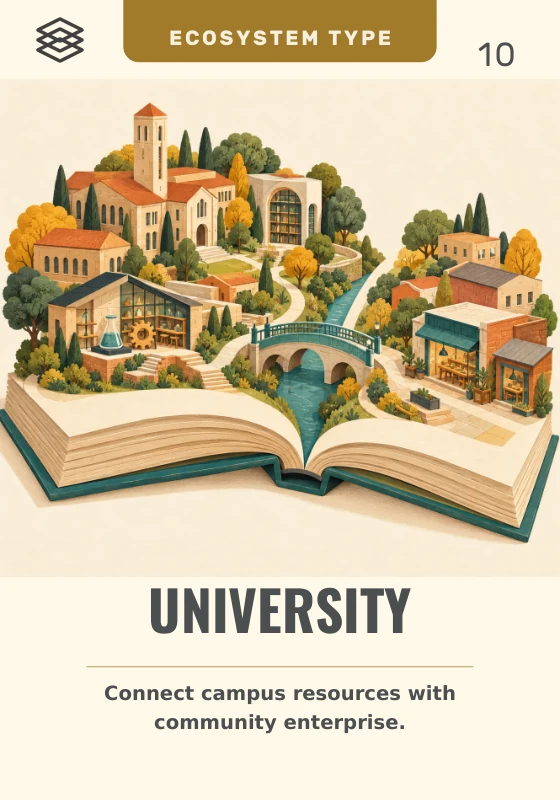
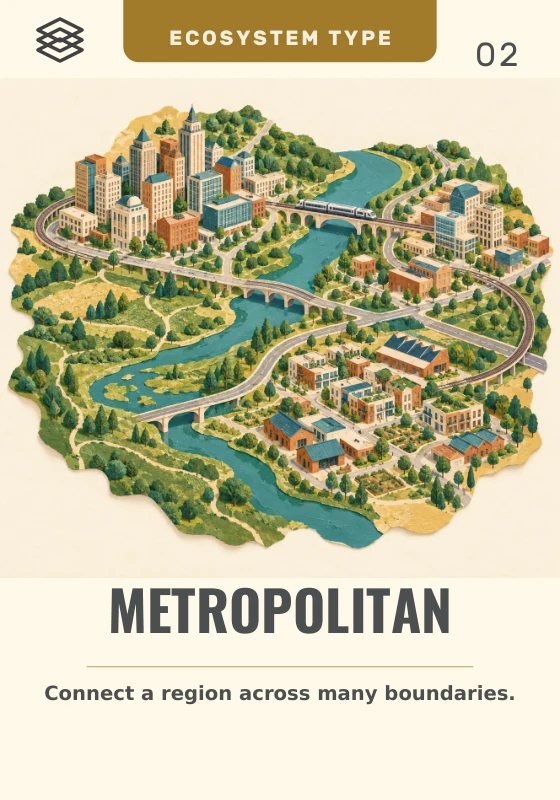
Describe the setting: its geography, industries, institutions, and communities. Several Types can apply at once, helping you understand the ecosystem’s assets, relationships, and constraints.

Examples from the full set of 22 Ecosystem Type cards.
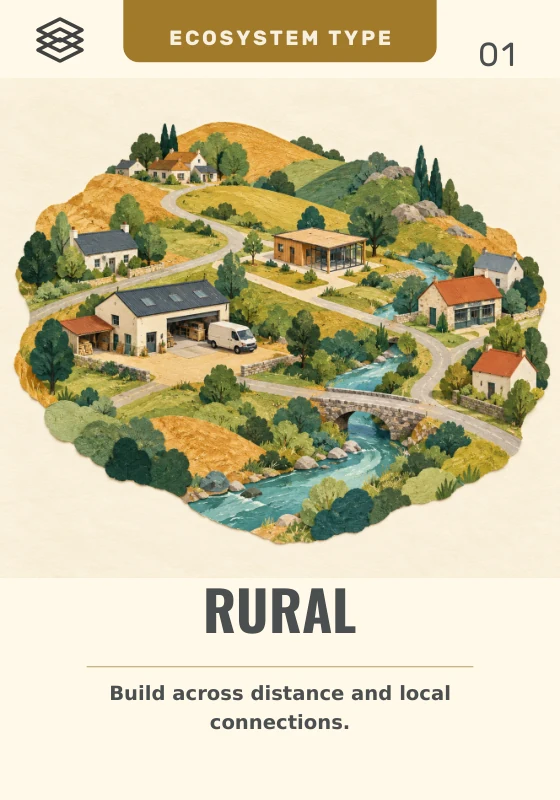
Rural illustrated Ecosystem Type cardUniversity illustrated Ecosystem Type cardMetropolitan illustrated Ecosystem Type card
Rural: Build across distance and local connections.

Ecosystem Forces

What wider conditions
are at play?

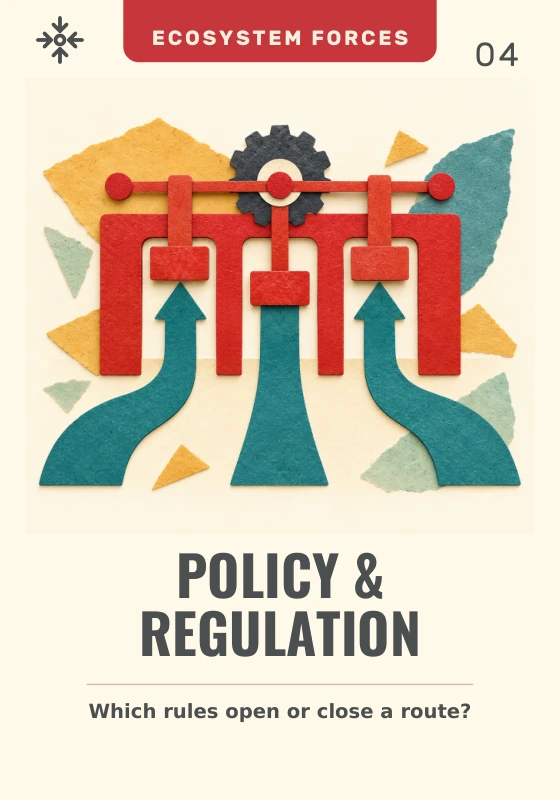
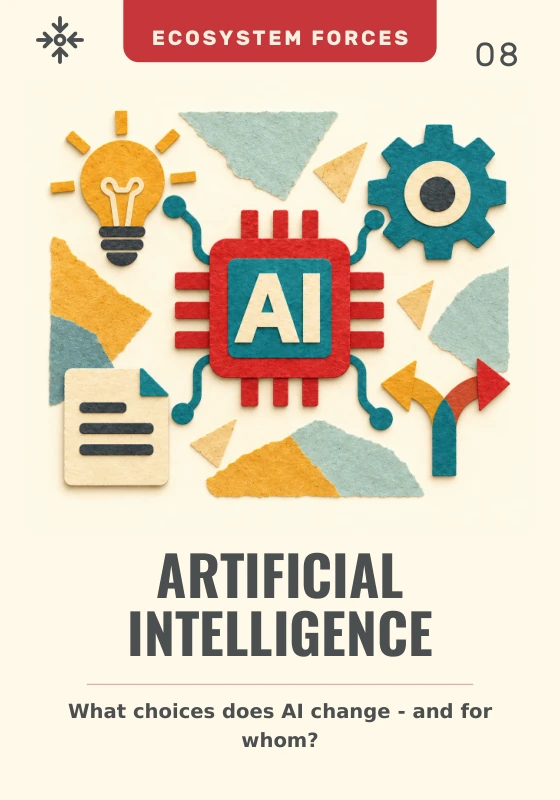
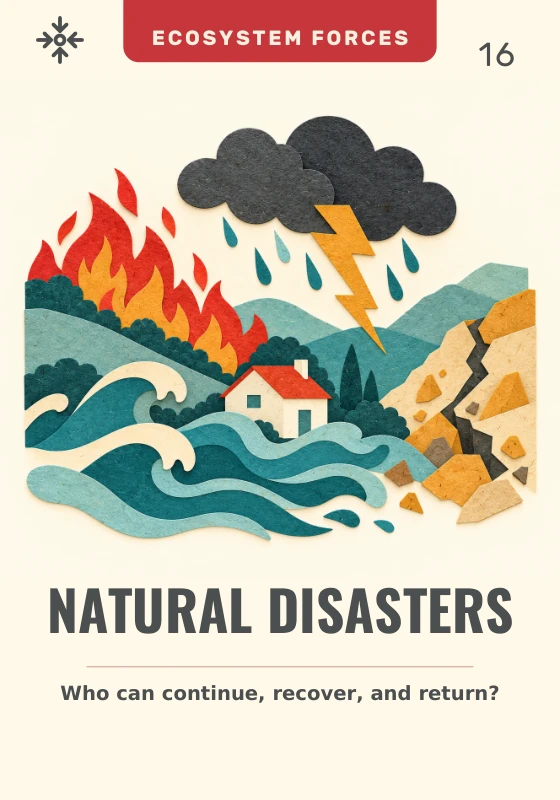
Examine the effects of power, policy, infrastructure, economic and technological trends, and major events. Ask who is affected and what you can change, influence, or prepare for.

Examples from the full set of 21 Ecosystem Force cards.

Policy & Regulation symbolic cut-paper Ecosystem Force cardArtificial Intelligence symbolic cut-paper Ecosystem Force cardNatural Disasters symbolic cut-paper Ecosystem Force card
Policy & Regulation: Which rules open or close a route?

Ecosystem Choices

What influences
decision-making?

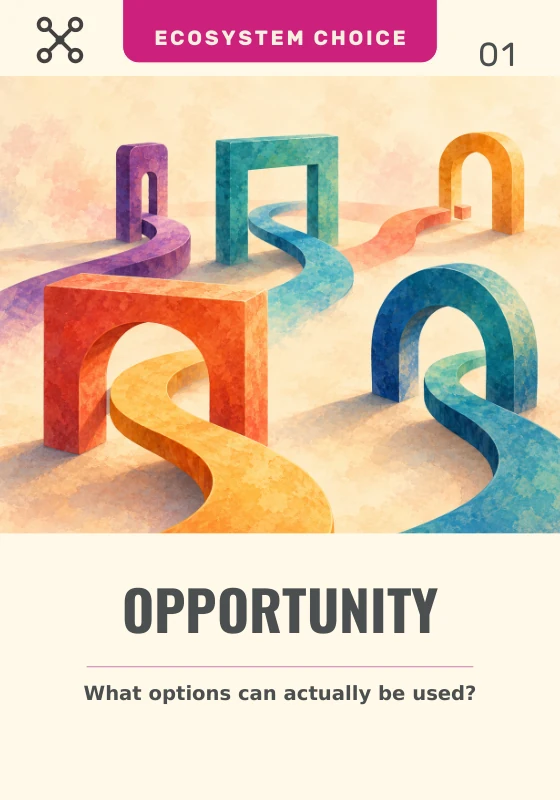
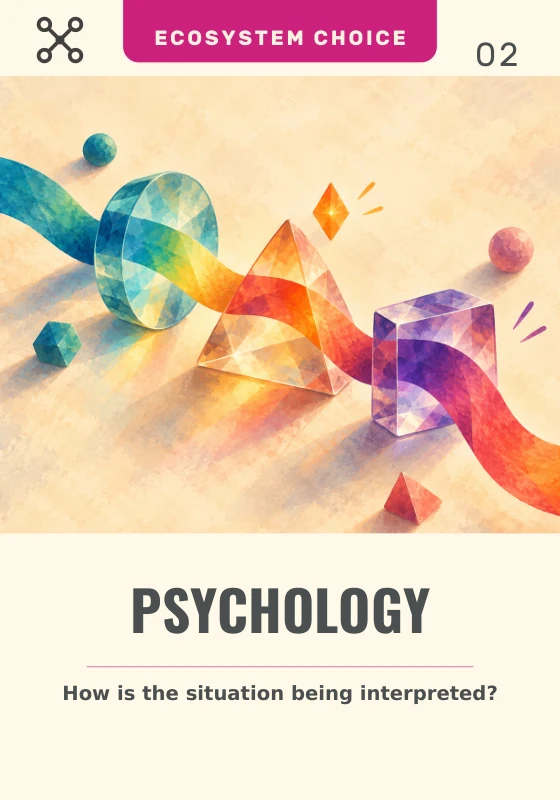
Explore four factors that influence how people make decisions: the options they can use, how they interpret a situation, their capacity to act, and the system around them.

Opportunity illustrated Ecosystem Choice cardPsychology illustrated Ecosystem Choice card
Opportunity: What options can actually be used?

Ecosystem Phases

How are we
working together?

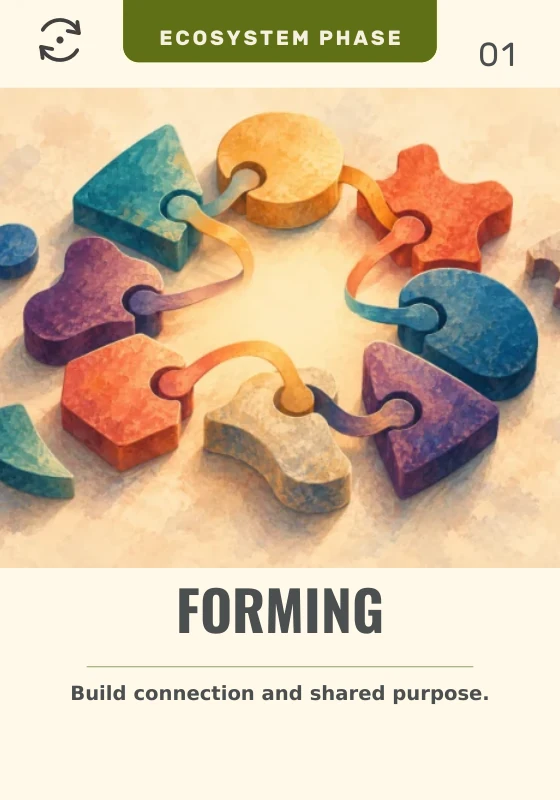
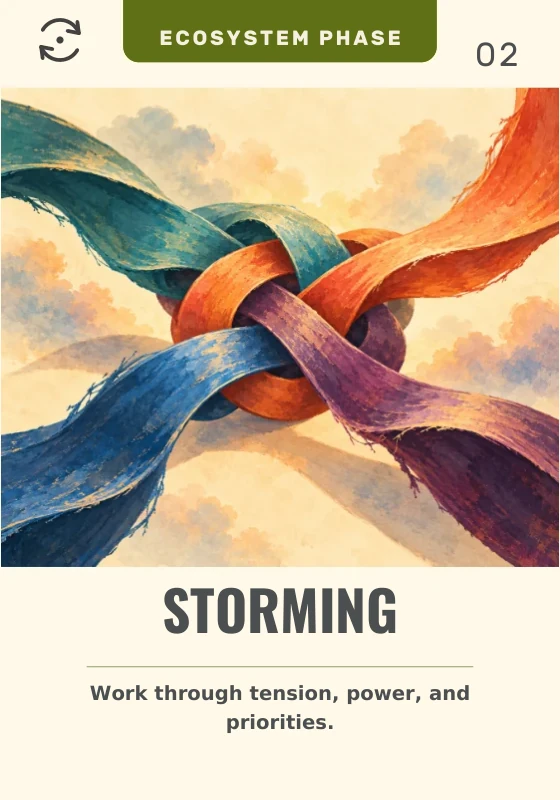
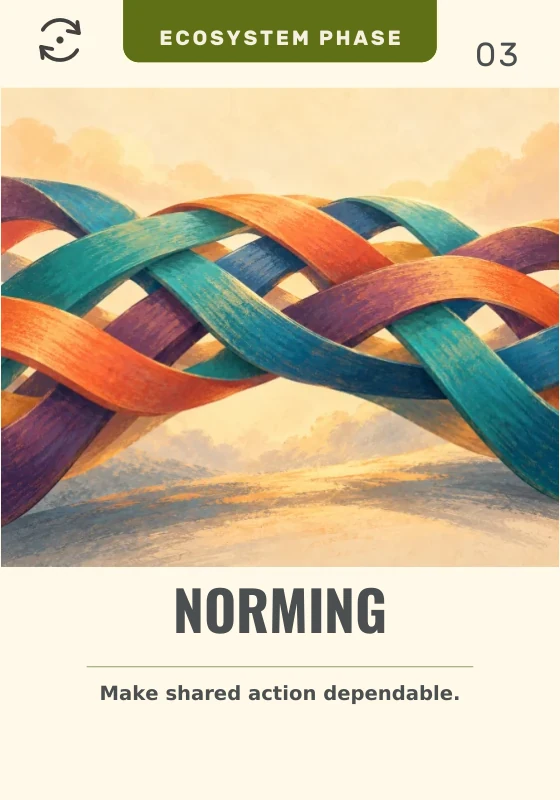
Notice how collaboration is developing: building relationships, working through differences, establishing routines, and learning what needs to change. Different initiatives can be in different phases, and phases can recur.

Forming illustrated Ecosystem Phase cardStorming illustrated Ecosystem Phase cardNorming illustrated Ecosystem Phase card
Forming: Build connection and shared purpose.

Practice the cycle

Make the invisible
easier to explore.

A shared visual language for noticing what happens, exploring why, and testing what might help. Start with one live situation and keep learning as it changes.

Signal Observations
Open the Browsing Signal card

Notice the pattern.

Notice recurring choices, actions, and patterns. Begin with what is happening, for whom, and under what conditions.

See Signal in Context
Source Tendencies
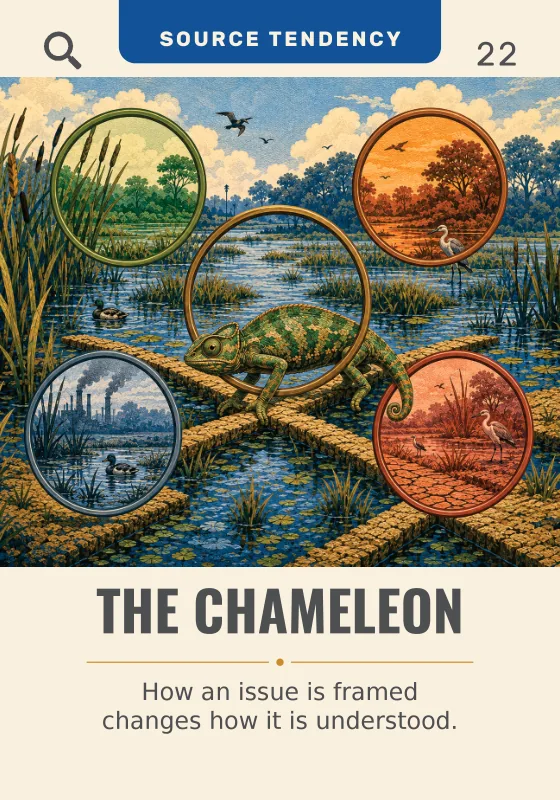
Open The Chameleon Source card

Widen the explanation.

Explore what might be contributing. Consider behavior, relationships, and structural conditions. Hold several explanations lightly.

See Source in Context
Shift Tools
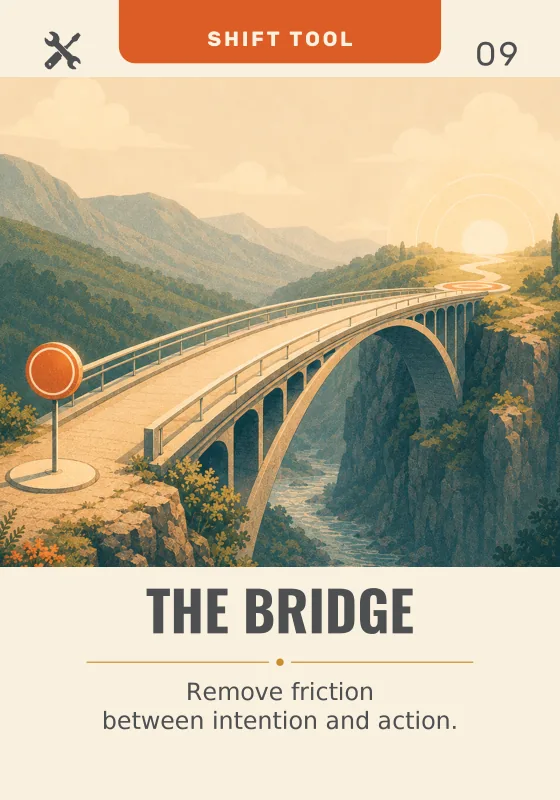
Open The Bridge Shift card

Test a change.

Change a condition around the behavior: communication, support, routines, or shared decisions. Watch what happens and iterate if/as needed.

See Shift in Context

Signal → Source → Shift is a cycle of inquiry and learning. Each new observation can change the next question.

Begin with one situation

Entrepreneurs are being passed between support providers without a clear next step. Follow one example from understanding the problem to trying and learning from a change.

Follow the Referral Scenario

Assess and learn

Study

Ecosystem Metrics

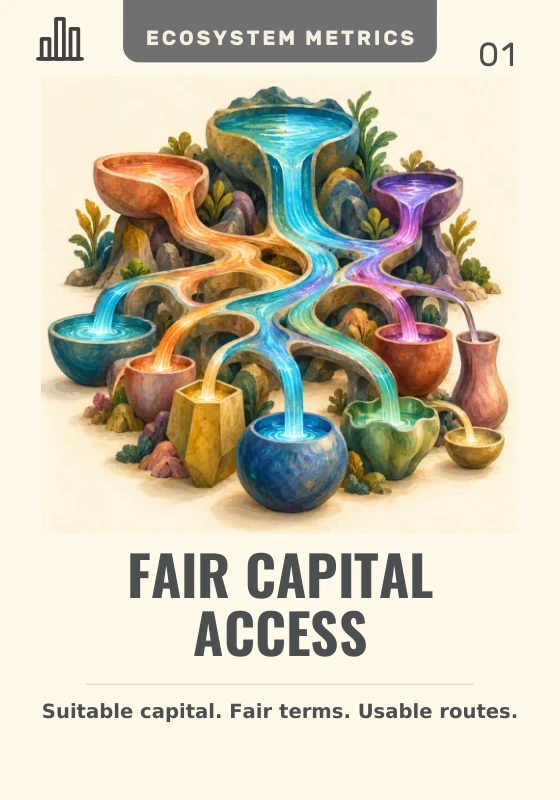
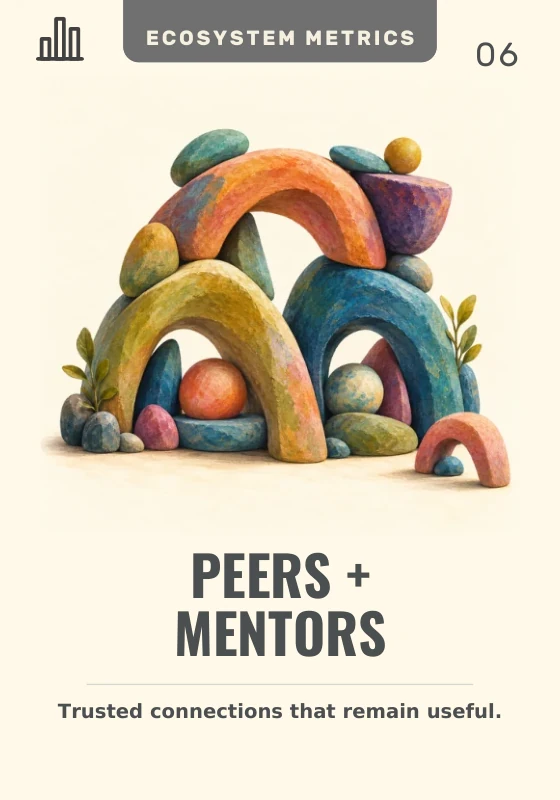
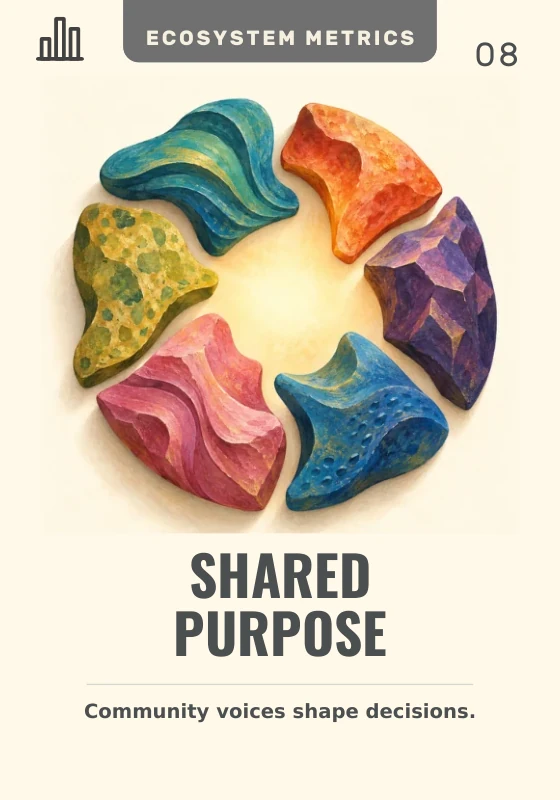
See what changes for the people the ecosystem serves.

Indicators for understanding and strengthening ecosystem vibrancy. Examine what entrepreneurs can actually access, use, and experience.

Signal, Source, and Shift help you test a change. Ecosystem Metrics help you study what follows, comparing evidence and lived experience over time.

See Study in Context

Adapted from Fay Horwitt’s Vibrancy Indicators, developed at Forward Cities in collaboration with the Kauffman Foundation and Bridgespan.

Fair capital access illustrated Ecosystem Metrics cardUseful peer and mentoring networks illustrated Ecosystem Metrics cardShared purpose with community influence illustrated Ecosystem Metrics card
Examples from the Ecosystem Metrics collection.
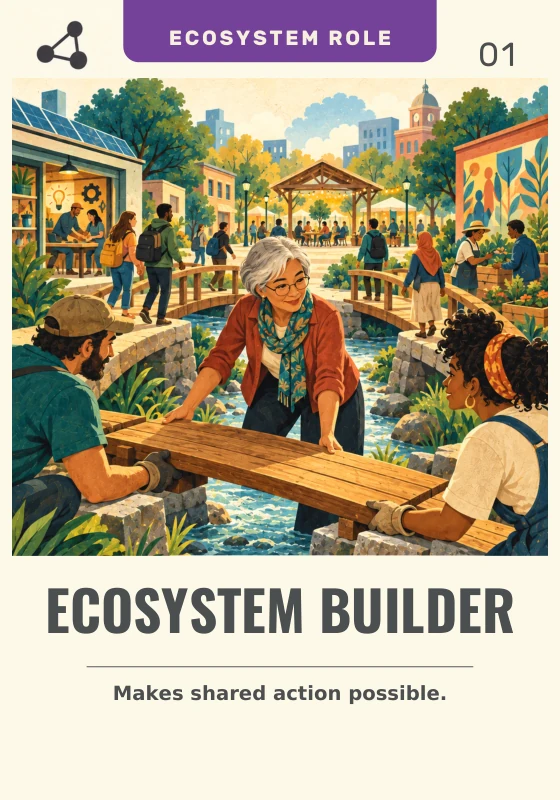
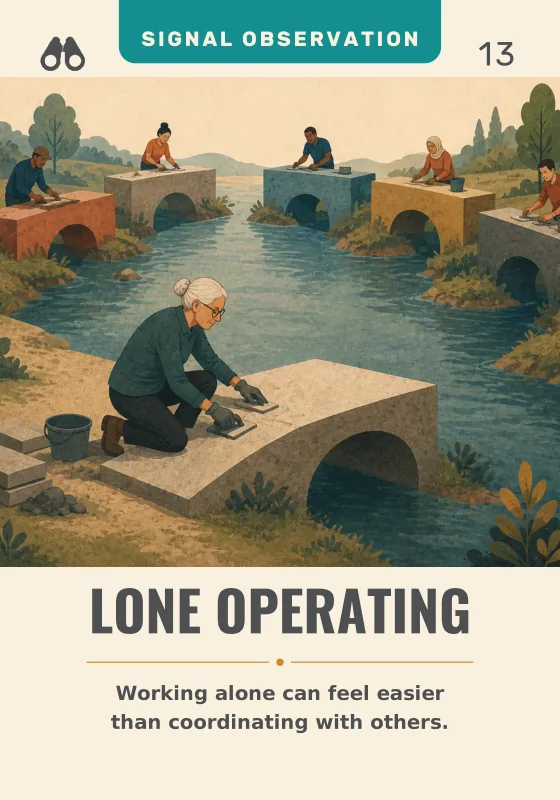
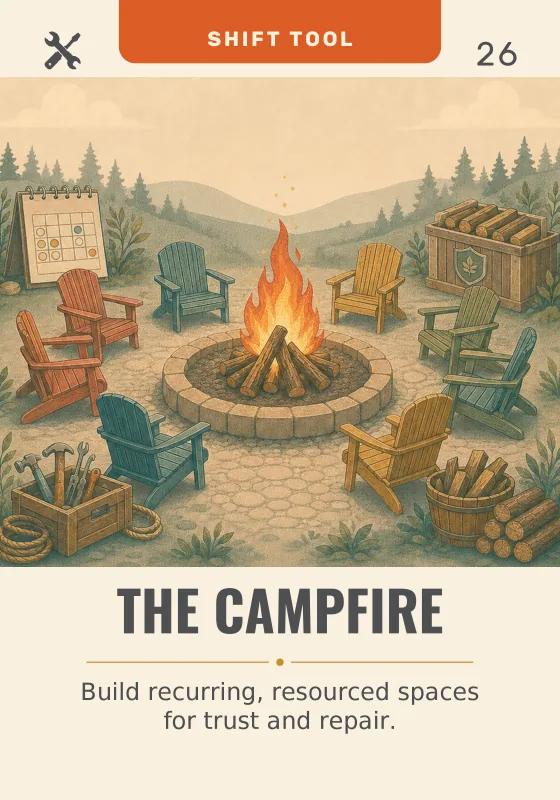
Ecosystem Builder illustrated role card Lone Operating illustrated Signal card The Campfire illustrated Shift card
Explore a role, notice a pattern, and consider a change.

Bring a live question

Start with curiosity.
See what becomes possible.

Mix and match cards around a real ecosystem question. Explore the people, patterns, and conditions involved—then test a useful next step.

Follow one scenario through the connected collections, from a challenge to a shared experiment and a way to learn from it.

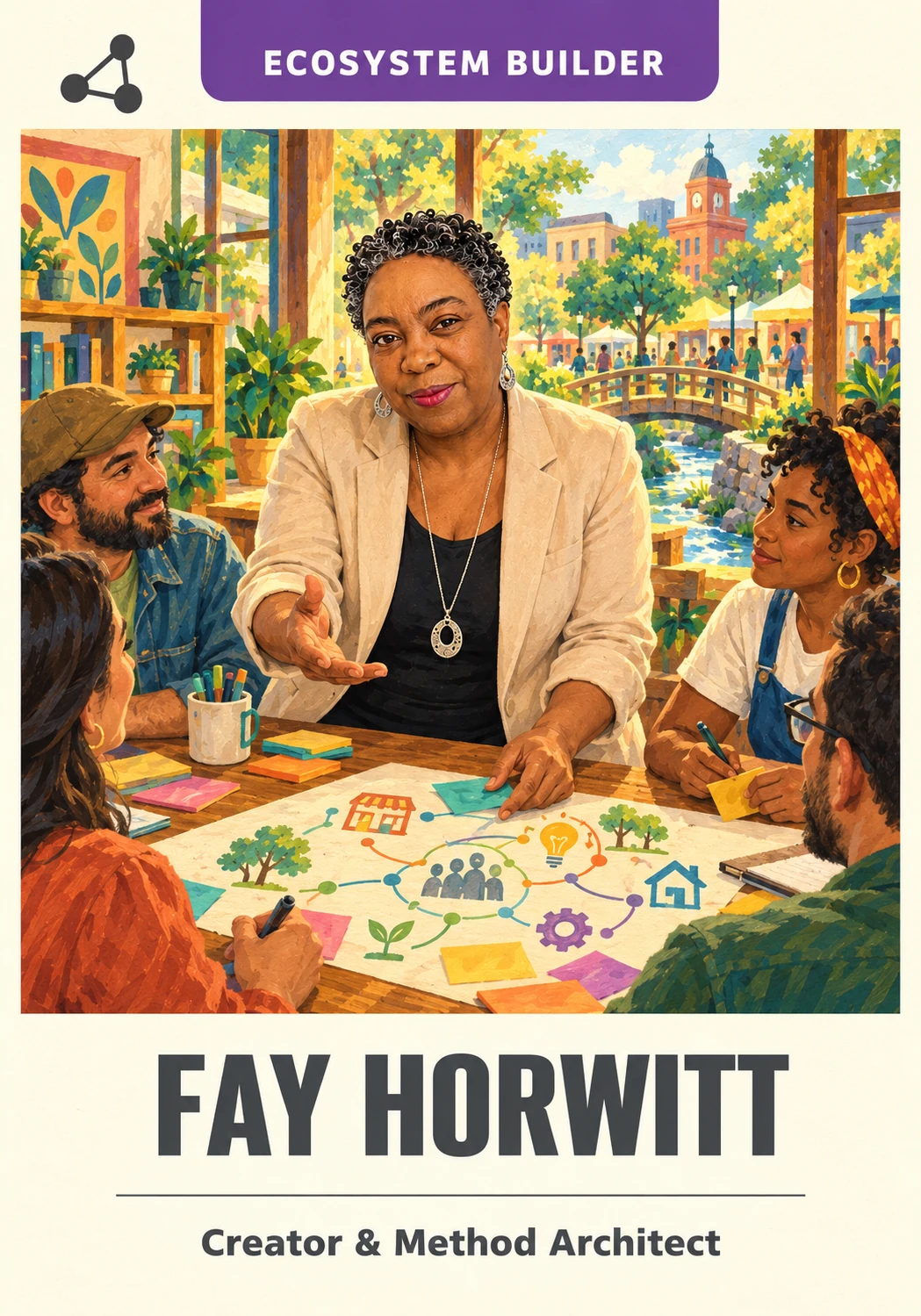
Fay Horwitt’s illustrated Ecosystem Builder portrait card

The person behind the practice

Meet the Creator

Fay Horwitt is the creator of The Irrational Ecosystem, founder of WayBuilders, Managing Director of the ESHIP Alliance, and architect of the Kauffman Foundation’s flagship ESHIP Communities program.

Her work includes ESHIP Communities, Main Street America’s rural ecosystem program, and PLACE Builders. Meet the practitioner behind the method.

Meet Fay Horwitt
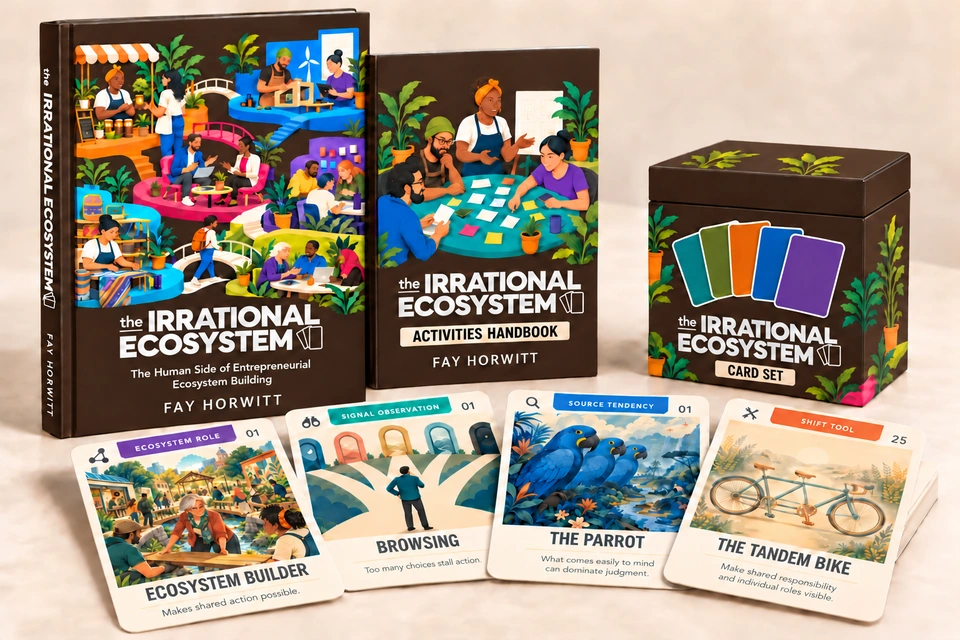
Concept mockup of The Irrational Ecosystem dark-brown book, activities handbook, and boxed card deck with a colored five-card fan and four current sample cards, including Ecosystem Builder

Launching soon

Bring the philosophy
into your work.

Read the book. Bring a workshop or speaker to your community. Choose a card Family Pack or Family Bundle with its own activity guide, or train with the complete collection.

Join the Waiting List for launch details and choose the offerings that interest you.

Explore the Offerings Join the Waiting List